

Projects of the Klassik Stiftung Weimar are funded by the European Regional Development Fund (ERDF) and the Free State of Thuringia, represented by the State Chancellery of Thuringia, Department of Culture and the Arts.
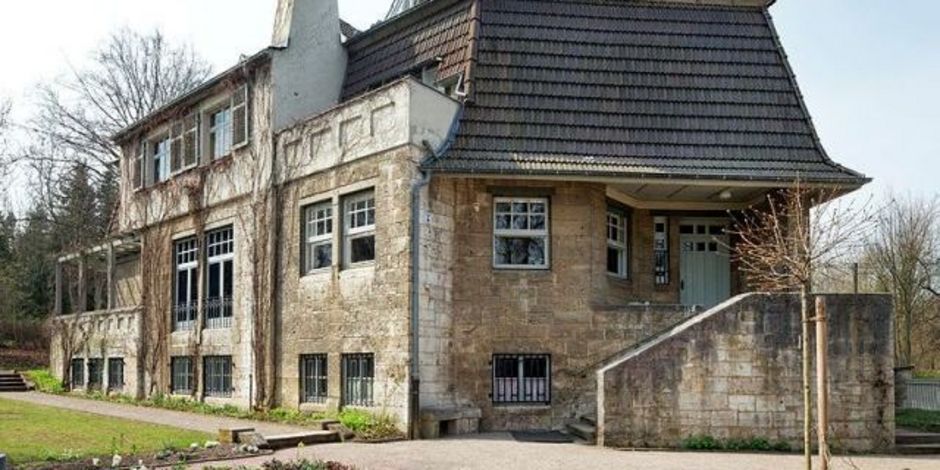
House Hohe Pappeln
Renovation and expansion of the museum areas in accordance with monument preservation guidelines
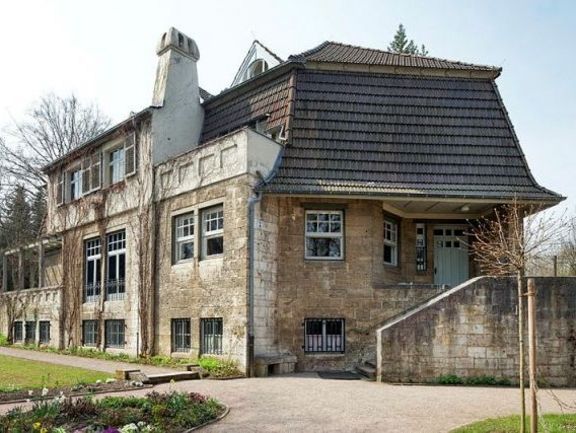
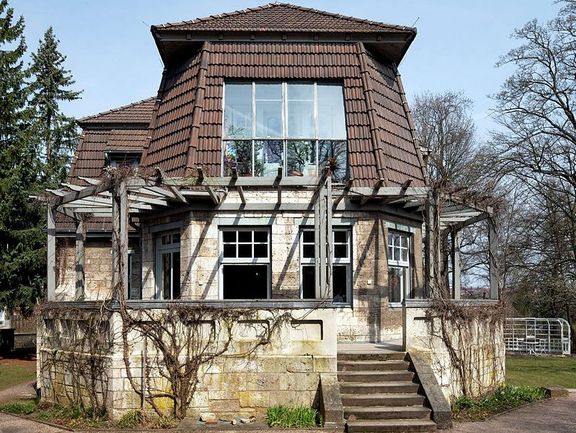
The Haus Hohe Pappeln is a Gesamtkunstwerk, a total artwork, of international standing dating back to the age of Art Nouveau and the beginnings of modernism. With its distinctive sculptural design, the building represents an artistic contribution to the architectural history of the early 20th century, and as such, helped pave the way to the Bauhaus.
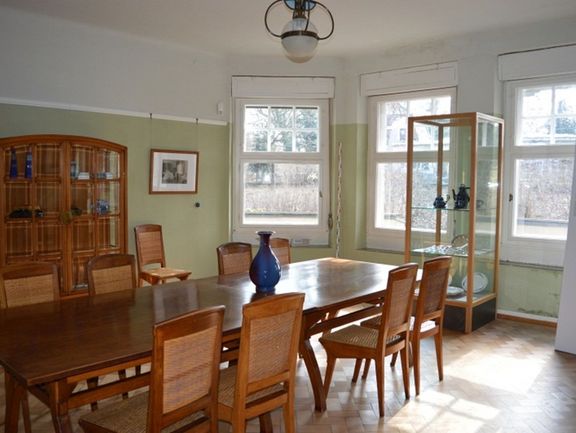
The building was designed by Henry van de Velde to be his family home and is thus exemplary of bourgeois living of that era. This project aims to expand the basement level of the building for museum functions and create new opportunities for cultural participation for the target group “youth and school classes”. To this end, possibilities for educational programmes will be created in the former children’s room, and an exhibition highlighting the building’s construction and usage over the years will be installed in the former kitchen. These spaces will augment the exhibition on the mezzanine floor where the building itself is presented as a spatial artwork.
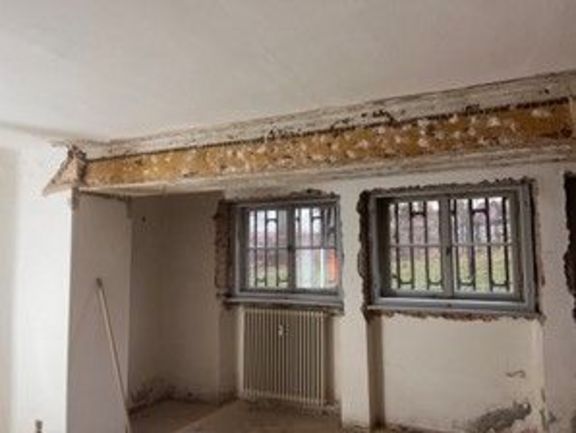
Before the new presentation spaces can be created, it is necessary to carry out structural repairs in the basement and on the building’s exterior. The lower floor of the house has been severely damaged by water penetration and structural weaknesses. The repairs and renovation work will involve extensive waterproofing measures, structural reinforcements and expansions. The facades, windows and doors, as well as the pergola and roof show signs of significant disrepair and require extensive renovation. The technical systems in the basement will have to be entirely replaced. In the future, the building’s heating needs will be supplied by a heat pump, for which the corresponding equipment will have to be procured and installed. The fire safety systems on the upper floors will be improved, and on the ground floor, the ticket counter and entrance area will be renovated.
Schedule
Approval planning: February 2025
Start of construction: November 2025
Project completion: 2027
Financing / Funding
The project is financed with resources provided by the Free State of Thuringia and the German Federal Commissioner for Culture and the Media (BKM) through the INK Programme.
Planners involved
Conservator: Dipl-Rest. Sven Raecke, Erfurt
Outdoor installations: freiraumpioniere, Weimar
Structural engineering: Trabert Ingenieure, GmbH & Co. KG, Geisa
Building systems: ARGE IB Steinbrück, Bad Langensalza + IT und Elektrotechnik Seyfarth, Weimar
Fire safety: Dr. Spindler und Kraft, Architekten und Sachverständige für Brandschutz PartG mbB, Erfurt
Building physics: BBS Ingenieurbüro, Weimar
Wood protection assessor: Thomas Brandt, Weimar
SiGeKo: IB Kramer, Wachsenburg