




Projects of the Klassik Stiftung Weimar are funded by the European Regional Development Fund (ERDF) and the Free State of Thuringia, represented by the State Chancellery of Thuringia, Department of Culture and the Arts.
The “Princess of New Germania”
Elisabeth Förster-Nietzsche’s nationalist colony in Paraguay
special exhibition
The incredible story of Nietzsche’s sister Elisabeth, who together with her husband Bernhard Förster, founded the nationalist settlement “Nueva Germania” in Paraguay.
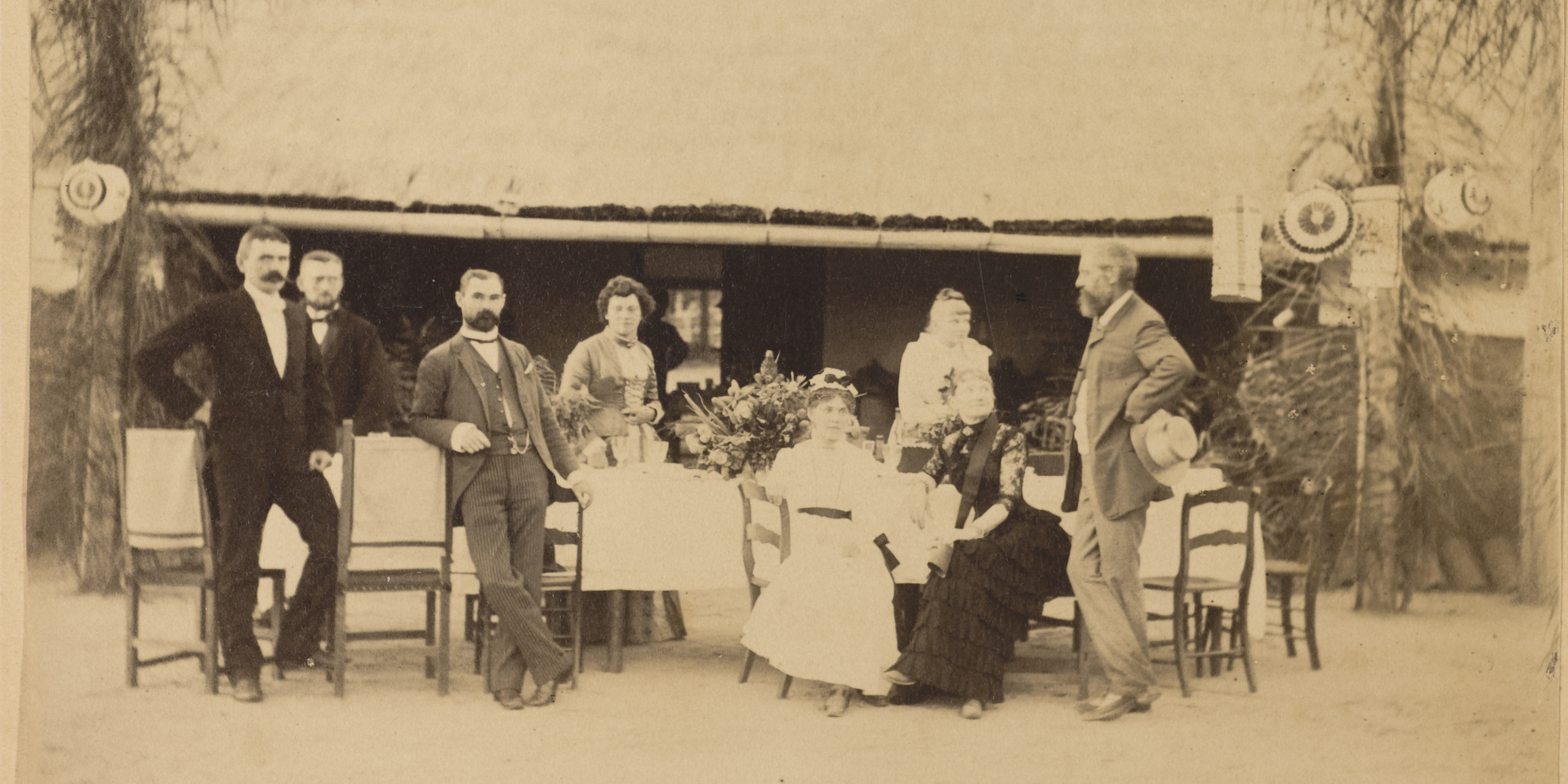
In 1886, Nietzsche’s sister Elisabeth travelled to Paraguay with her husband, the anti-Semitic agitator Bernhard Förster and 14 German families to establish a German nationalist colony called “Nueva Germania”. The colonialists were lured to the Paraguayan rainforest with grand promises of affluence, living in a community of vegetarians, teetotallers and „racially pure“ Germans. However, their life in the commune was soon overshadowed by debt, discord and illness. After Förster’s highly publicised death, Elisabeth returned to Germany as the “Princess of New Germania” (Frankfurter General-Anzeiger, 1935) and began recounting her experiences not as a dismal failure but rather an exciting adventure. This special exhibition presents documents depicting the settlers’ departure, the striking contrast between dreams and reality of the founding generation, and photos of Nueva Germania today.
Publication The “Princess of New Germania”.
Your visit
Opening hours
Address
Tickets
Free entry
plus museum admission
Organizers
Accessibility
 Services for the hearing impaired
 Offers for the visually impaired
 Offers in the Weimar+ app
 Offers in simple language
- Guided tours for blind and visually impaired groups of visitors possible
 Rollator access possible
Accepted cards
- ModernismCard
- MuseumCard
- weimar card