




Projects of the Klassik Stiftung Weimar are funded by the European Regional Development Fund (ERDF) and the Free State of Thuringia, represented by the State Chancellery of Thuringia, Department of Culture and the Arts.
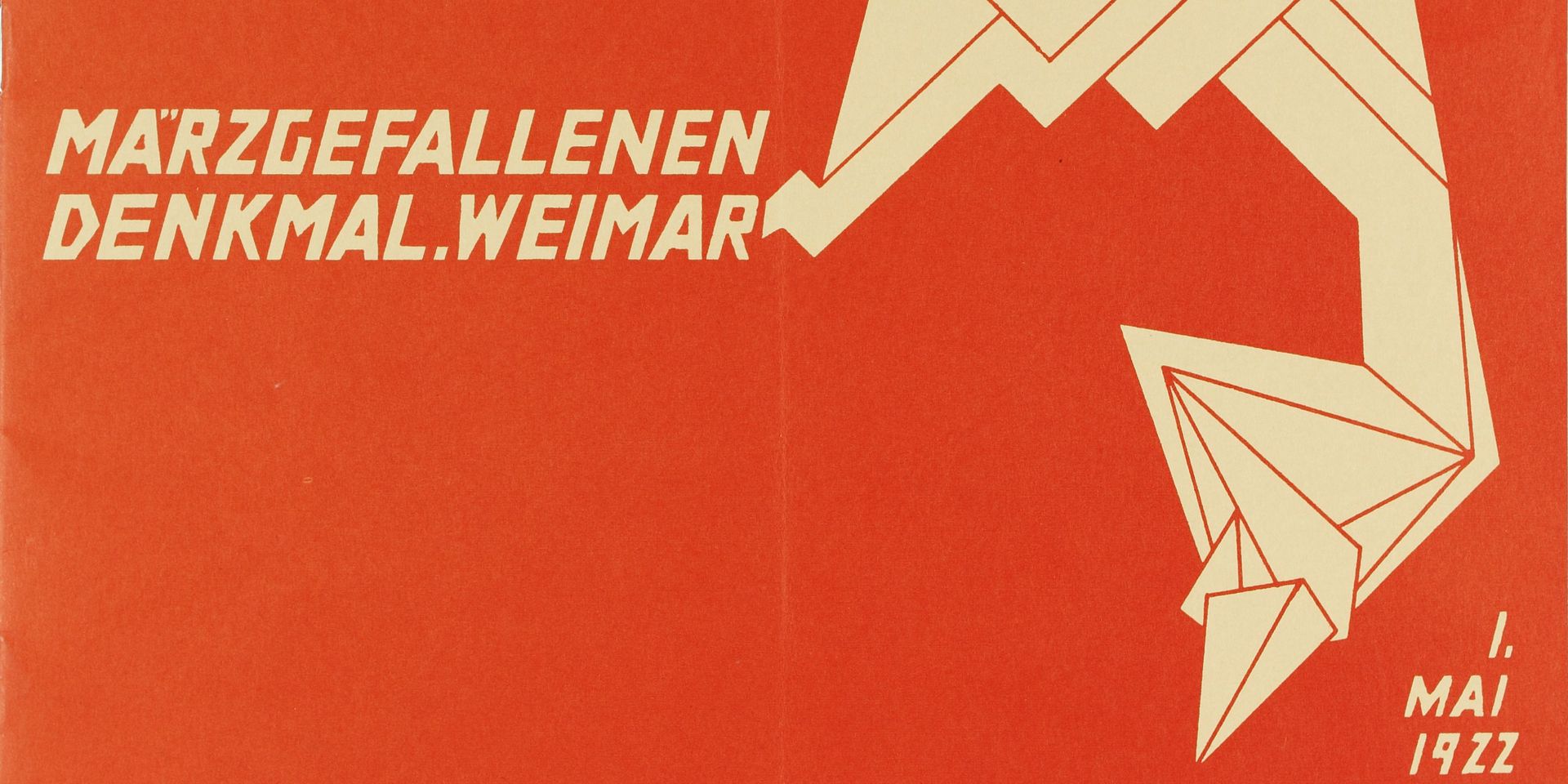
Bauhaus and politics
presentation
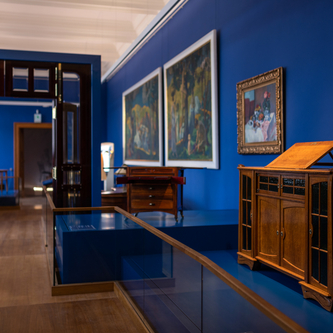
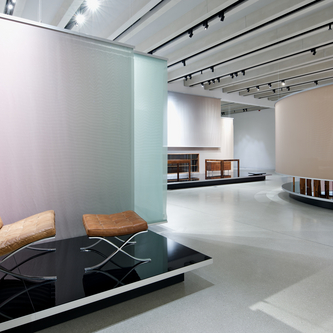
The presentation sheds light on the political dimension of the famous avantgarde school from 1919 to 1933. In addition to revolutionising art and design, the Bauhaus also served as a field of experimentation for social utopias and dealing with political systems. The question of the freedom of science and art is more relevant today than ever.
The Bauhaus existed as an avant-garde school from 1919 to 1933 in Weimar, Dessau and Berlin. In August 1933, it decided to disband under pressure from the Nazi regime. Why an exhibition on ‘Bauhaus and politics’ now?
There is certainly nothing easy about this theme. The school was a place for students and teachers to think about more than just art, architecture and design. After the experience of the First World War and the transition to the Weimar Republic, it was also about shaping a new liberal, democratic society. As an institution, the Bauhaus had to deal with different political conditions in order to secure its existence. In addition, political developments had a direct impact on internal school matters.
Our exhibition deals with the developments at the three locations Weimar, Dessau and Berlin and shows how important the freedom of science and art still are today.
Your visit
Opening hours
Is open today
Address
Tickets
Free entry
plus museum admission
Accessibility
 Services for the hearing impaired
 Offers for the visually impaired
 Offers in the Weimar+ app
 Offers in DGS
 Offers in simple language
 Disabled toilet available
 Accessibility tested
 Elevator available
- Guided tours for blind and visually impaired groups of visitors possible
 Rollator access possible
 Wheelchair access possible
Accepted cards
- BauhausCard
- ModernismCard
- MuseumCard
- weimar card