

Projects of the Klassik Stiftung Weimar are funded by the European Regional Development Fund (ERDF) and the Free State of Thuringia, represented by the State Chancellery of Thuringia, Department of Culture and the Arts.
History Meets the Present
A review of the history and perspectives of the UNESCO Bauhaus Sites

special exhibition
In December 1996, UNESCO officially added the famous Bauhaus sites in Weimar and Dessau to its World Heritage List. To mark the 30th anniversary of this distinction, the exhibition presents selected historic postcards and photographs, as well as a projection of recently taken photos of these sites, including the Haus Am Horn in Weimar and the iconic Bauhaus Building in Dessau.
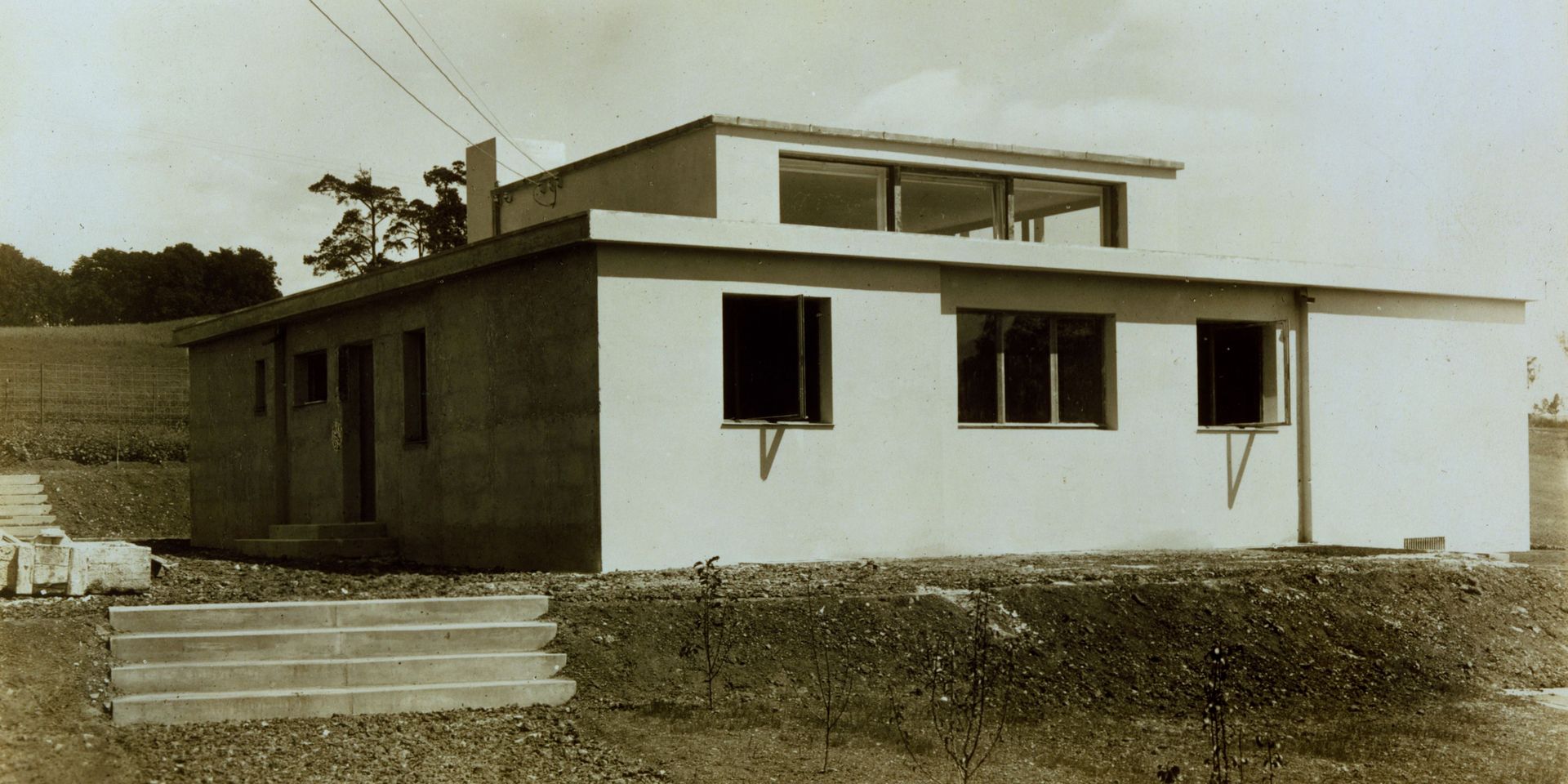
The recognised Bauhaus Sites in Weimar include the buildings of the former Grand Ducal Saxon Art School, the Grand Ducal Saxon School of Arts and Crafts , and the Haus Am Horn, built in 1923. In Dessau, the distinction was granted to the exceptional Bauhaus school building and the seven Masters’ Houses. In 2017, UNESCO added the ADGB Trade Union School in Bernau, designed by Hannes Meyer, to its list of recognised Bauhaus sites, along with the Houses with Balcony Access, which were built during Meyer’s term as director in Dessau.
The UNESCO committee justified its decision to recognise these buildings as World Heritage Sites on account of how they marked ‘a radical renewal of architecture and design’ and represented ‘the cultural blossoming of Modernism, which began here, and has had an effect worldwide.’
Even while the school was in its early stages of development, numerous pictures were taken of the now-famous Bauhaus buildings in what was then the relatively new medium of photography. Picture postcards depicting the Bauhaus buildings were frequently sent to contemporaries who were fascinated by this new, modern architectural style. Many of these images have since found a place in our global collective memory.
On the occasion of this year’s 30th anniversary of the induction of the Bauhaus sites to the UNESCO World Heritage List, the exhibition presents a selection of historic postcards from the Dicke Collection, as well as historic photographs of the exceptional UNESCO buildings at three locations. The Dicke postcard collection was handed over to the Klassik Stiftung Weimar in 2022, parts of which will now be presented to the public for the first time in the 2026 Theme Year “Open ”.
Your visit
Opening hours
Closed today
open again
Address
Bauhaus-Museum Weimar
Stéphane-Hessel-Platz 1
99423 Weimar
Deutschland
Tickets
Free entry
plus museum admission
The presentation includes photos of the famous Bauhaus Building in Dessau, which Walter Gropius, its director, designed in 1925 and built in 1926. They depict what would become new standards in architectural design, and not only from various directions, but also bird’s-eye perspectives from the air. The ADGB Trade Union School in Bernau, designed by Hannes Meyer and Hans Wittwer in cooperation with Bauhaus students, is documented with an outstanding assortment of postcards from the Dicke Collection which emphasise the unique architectural features of the building’s interior and exterior areas.
The Haus Am Horn in Weimar – the world’s oldest existing Bauhaus structure – is documented by photos contained in the famous Bauhaus albums. These were created by the Bauhaus in response to its politically driven expulsion from Weimar to Dessau in 1925. Today they are kept in the Archive of Modernism at the Bauhaus-Universität Weimar. The Stadtarchiv Weimar has provided additional historic photographs and postcards, depicting the two school buildings in Weimar that Henry van de Velde had built in 1905/06 and 1911, respectively.
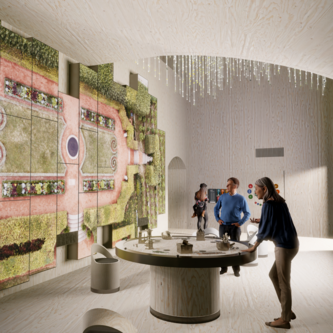
In cooperation with media designer Andreas Wolter and photographer Tobias Adam, the exhibition will include an installation featuring recently taken photos of the UNESCO Bauhaus Sites in Weimar, Dessau and Bernau to supplement the existing historic photographic material.
Accompanying programme
| 26 March 2026 | 6pm | Project Room A, Bauhaus Museum Weimar | Presentation by Mr Groß, marking the 30th anniversary of the UNESCO committee’s recognition of the Bauhaus sites as World Heritage Sites |
| 9 April 2026 | 6pm | Project Room A, Bauhaus Museum Weimar | Presentation by Dr Ivo Hammer: 15th anniversary of UNESCO World Heritage recognition of the Villa Tugendhat in Brünn. The restoration of an icon of modernism. |
| 4 June 2026 | 6pm | Project Room A, Bauhaus Museum Weimar | Lecture and book presentation by Dr Christine Hopfengart |
| 7 June 2026 | starts 9am | in Weimar | UNESCO World Heritage Day |
Accessibility
 Services for the hearing impaired
 Offers for the visually impaired
 Offers in the Weimar+ app
 Offers in DGS
 Offers in simple language
 Disabled toilet available
 Accessibility tested
 Elevator available
- Guided tours for blind and visually impaired groups of visitors possible
 Rollator access possible
 Wheelchair access possible
 Access with electric wheelchair possible