




Projects of the Klassik Stiftung Weimar are funded by the European Regional Development Fund (ERDF) and the Free State of Thuringia, represented by the State Chancellery of Thuringia, Department of Culture and the Arts.
Monarchists, Democrats, National Socialists
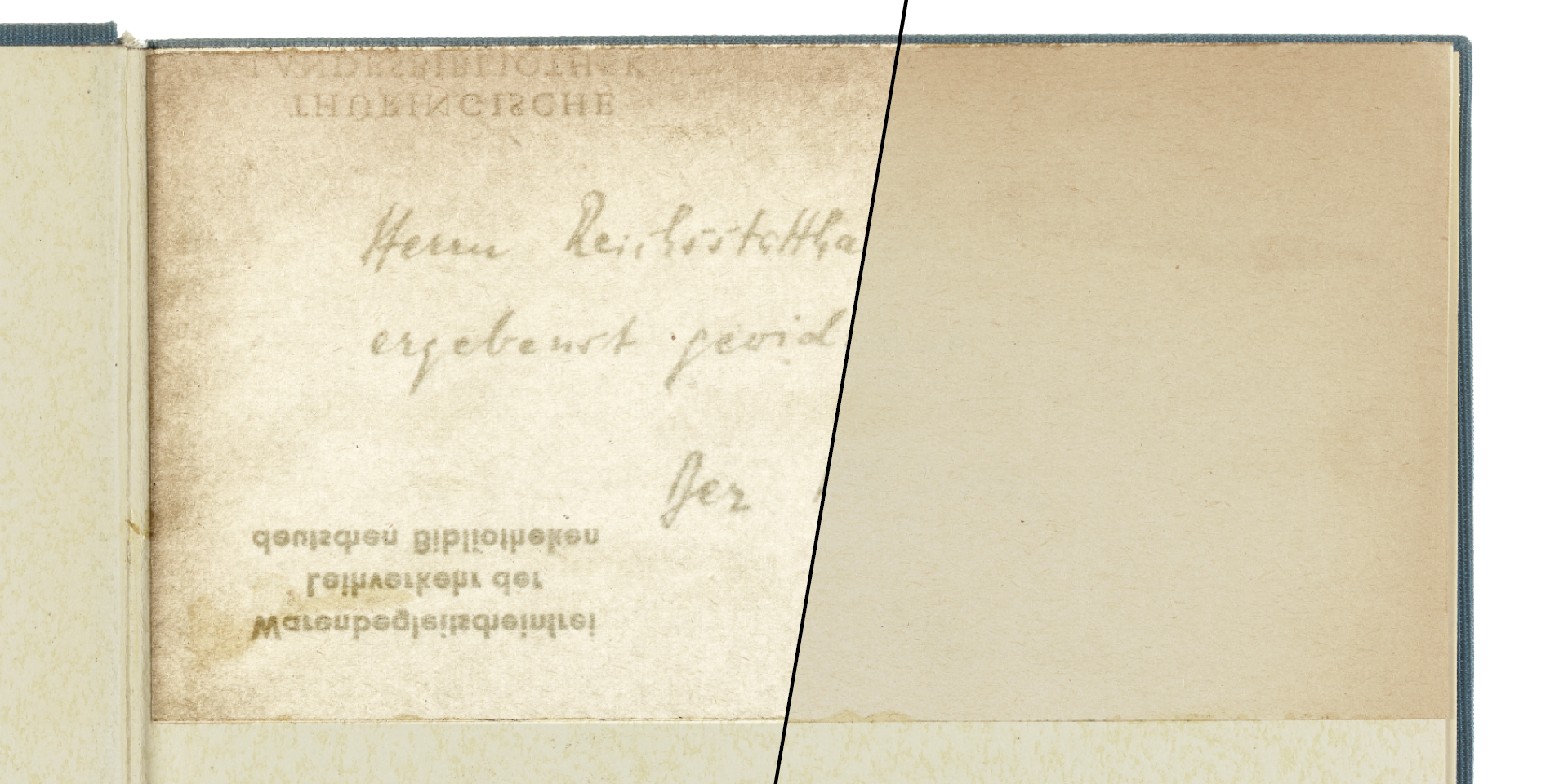
Handwritten dedications as traces of history

special exhibition
What do dedications in books tell us about the people who wrote them in? What do we learn about
those for whom they were intended? A search for clues.
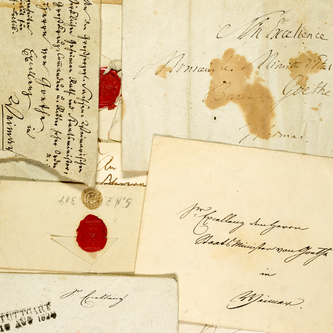
Why does a writer give away a book that a colleague had gifted him “most sincerely”? Or who gives an abdicated emperor a literary work and wishes a “blessed Christmas”? Such handwritten dedications shed light on interpersonal relationships and open a historical window to bygone times.
The special exhibition at the Study Centre of the Herzogin Anna Amalia Bibliothek presents books with dedications from the first half of the 20th century, which in turn made them one-of-a-kind collector’s items! The recipients and bestowers of these dedications belonged to a diverse range of political factions – monarchists, democrats and National Socialists. Yet how did their books end up in the library? In addition to personal backstories, the dedications are placed in their respective historical contexts.
Your visit
Opening hours
Address
Tickets
Free entry
Accessibility
 Offers in the Weimar+ app
 Disabled toilet available
 Elevator available
 Guided tours for blind and visually impaired groups of visitors possible
 Rollator access possible
 Wheelchair access possible
 Access with electric wheelchair possible