


Projects of the Klassik Stiftung Weimar are funded by the European Regional Development Fund (ERDF) and the Free State of Thuringia, represented by the State Chancellery of Thuringia, Department of Culture and the Arts.
I, Ottilie.
The Self-images of Women around 1800 and Today
special exhibition
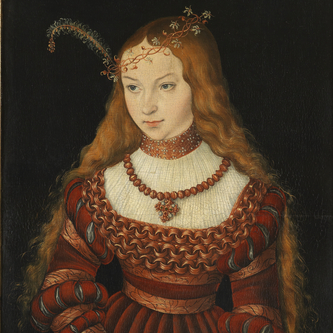
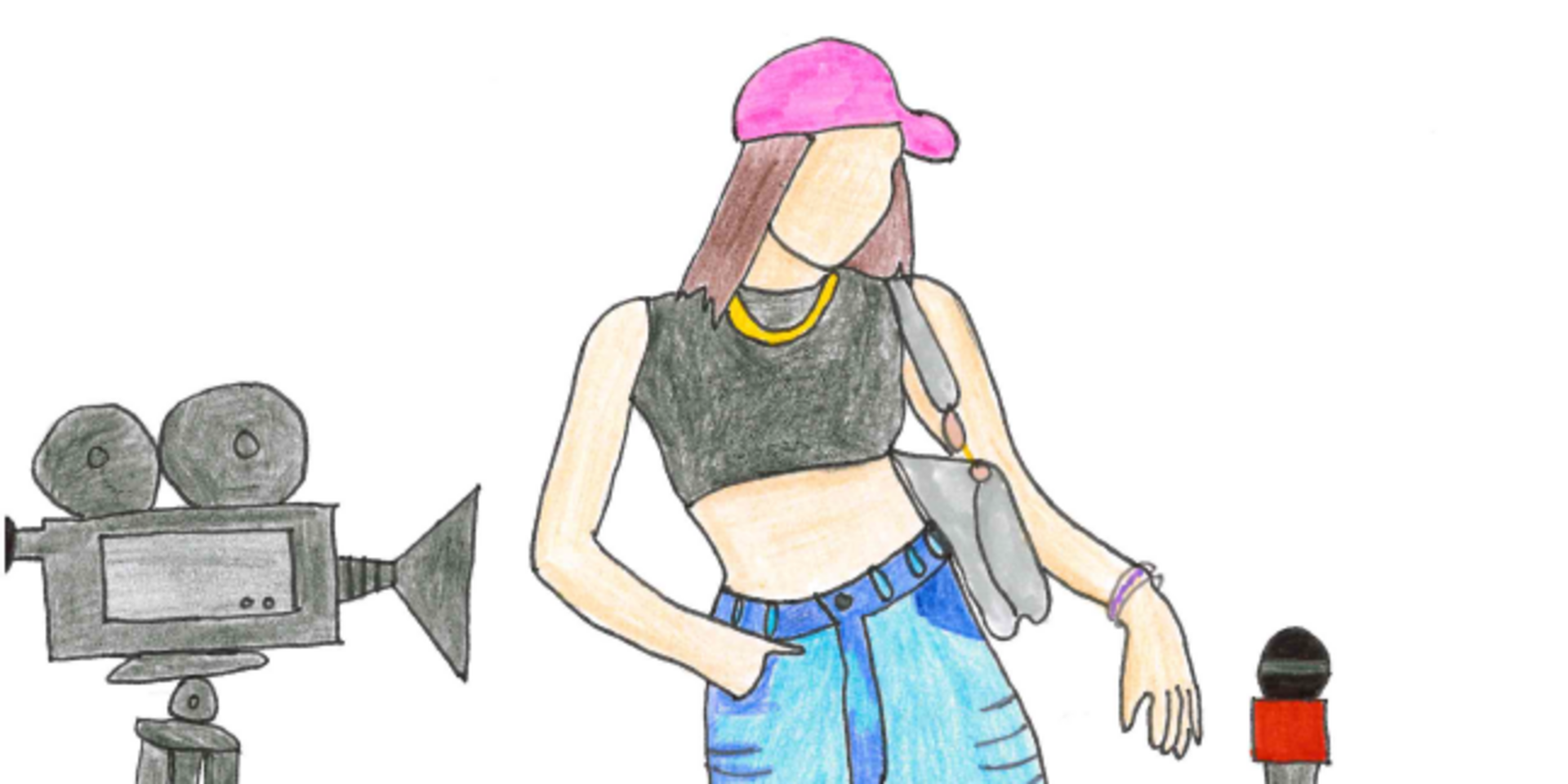
“Who am I?” Ottilie von Goethe asked in 1819 and drew ironic sketches of herself. These were used as inspiration for girls of an eighth grade class in Baden-Württemberg. The exhibition presents the impressive results of this female search for identity.
In 1819 Ottilie von Goethe created a special notebook for her childhood friend Adele Schopenhauer containing eight watercolour illustrations of herself. These drawings can be interpreted in part as an attempt to ironically express female role models. In one, Ottilie paints a fantasy image of herself donning a costume, while other images depict her as a strict matron, a combative-looking woman in uniform and a Greek goddess. The girls of an eighth-grade class at the Franziskus Gymnasium in Mutlangen intensively studied these portraits. They analysed the depictions and creatively interpreted them from a contemporary perspective. The exhibition presents the girls’ very personal drawings and descriptions. They offer refreshing perspectives on the roles of women and female attributes of yesterday and today. The images encourage visitors to examine and reflect on the various roles they play in their own lives.
Your visit
Accessibility
 Services for the hearing impaired
 Offers in the Weimar+ app
 Offers in simple language
 Disabled toilet available
 Elevator available
 Guided tours for blind and visually impaired groups of visitors possible
 Rollator access possible
 Wheelchair access possible
 Access with electric wheelchair possible
Accepted cards
- MuseumCard