




Projects of the Klassik Stiftung Weimar are funded by the European Regional Development Fund (ERDF) and the Free State of Thuringia, represented by the State Chancellery of Thuringia, Department of Culture and the Arts.
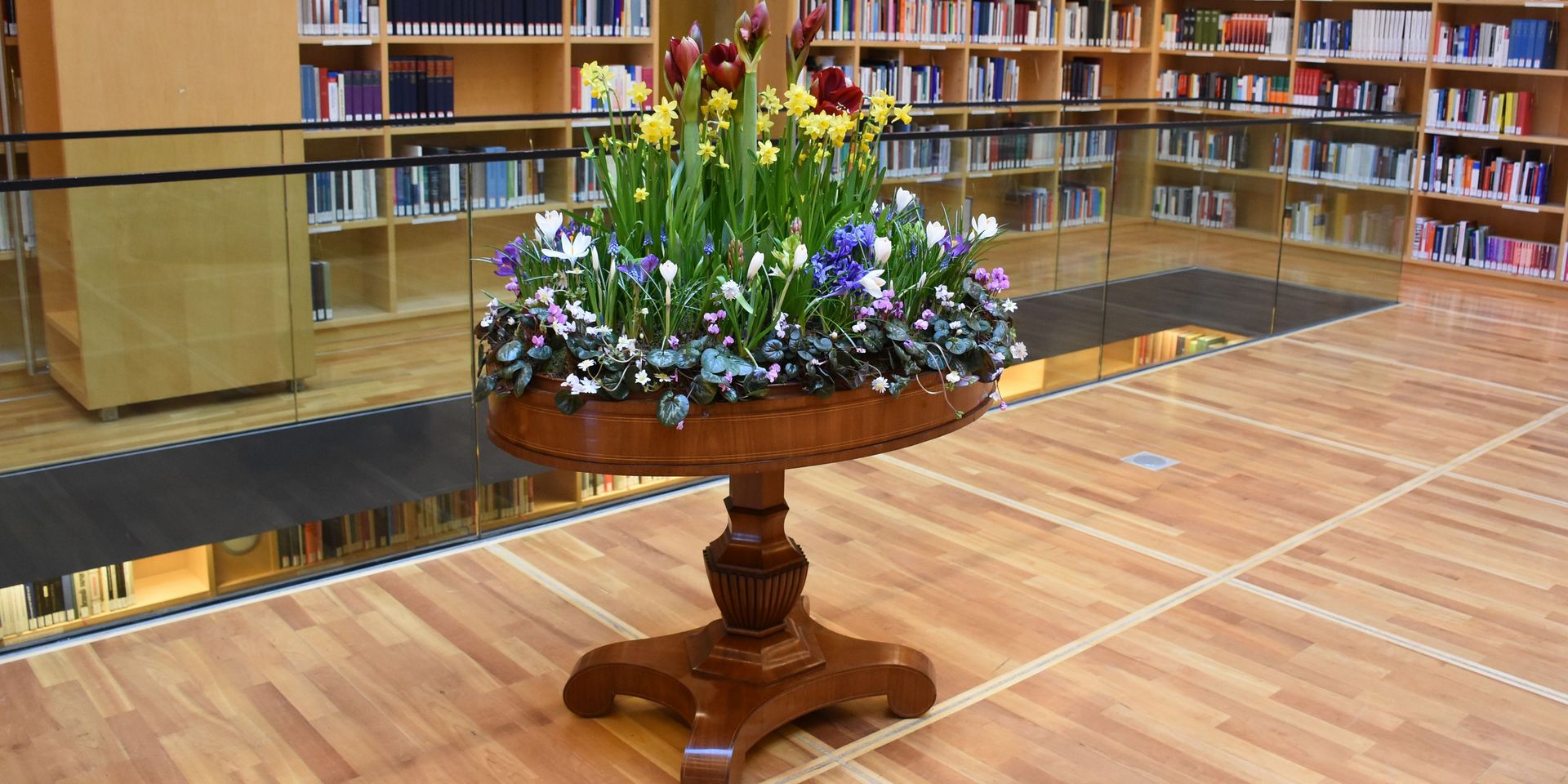
Jardin portativ
The Floral Table of Grand Duchess Maria Pavlovna
special exhibition
In commemoration of Maria Pavlovna’s birthday on 16 February, the gardeners of Belvedere Castle decorate a historic table from her estate with a variety of springtime flowers.
The birthday of Maria Pavlovna (1786–1859) on 16 February always offered a fitting occasion to decorate the rooms of the Weimar City Castle with flowers. As early as 1792, the Weimar publisher and manufacturer Friedrich Justin Bertuch presented what he called a “Jardin portatif” or “portable garden” in his “Journal des Luxus und der Moden” (Journal of Luxury and Fashion). To this end, the Belvedere court gardener Eduard Sckell supplied the Grand Ducal family with six to ten hyacinths, daffodils and primroses every week during the winter of 1847/48. Sckell’s task has since been delegated to the trainees of the Gardens and Parks Department of the Klassik Stiftung Weimar.
Your visit
Opening hours
Address
Tickets
Free entry
Organizers