






Projects of the Klassik Stiftung Weimar are funded by the European Regional Development Fund (ERDF) and the Free State of Thuringia, represented by the State Chancellery of Thuringia, Department of Culture and the Arts.
Conference/Training/Seminar
Constructions of the Classical in Central Europe:
Chernivtsi and Bukovina
Conference 19 till 21 April 2023
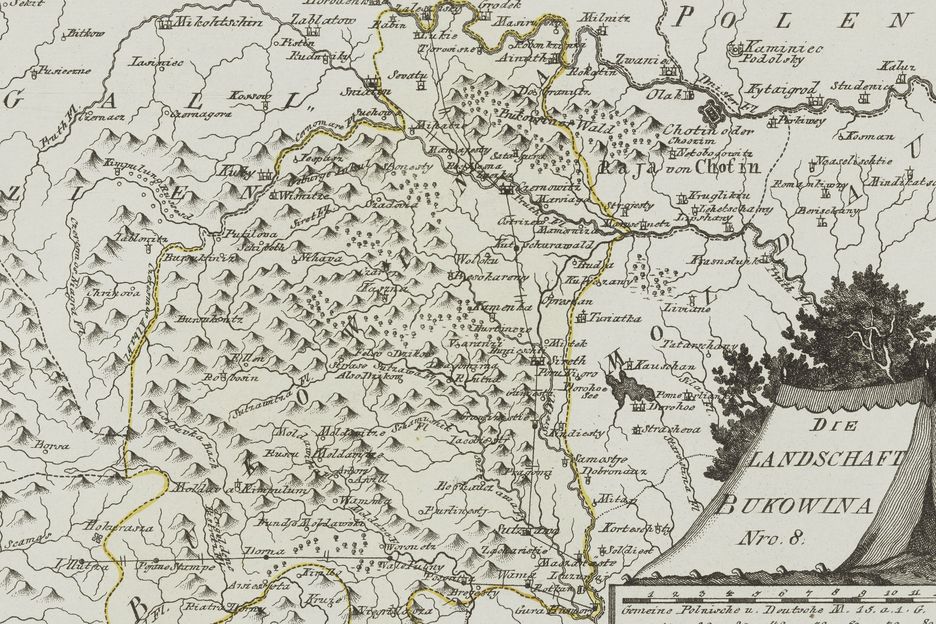
The conference of the Zentrum für Klassikforschung and the Johann Gottfried Herder-Forschungsrat (Commision for Language and Literature), directs attention to a region of Central Europe that today belongs to Ukraine and Romania and also represents the historical and cultural diversity in Eastern Europe. What is the function of constructions of the Classical in a region that has been forced to translate, mediate, and endure several cultures and literatures? Both, Chernivtsi and Bukovina, represents the past of the Habsburg monarchy as well as the Age of Extremes and its Romanian Soviet and Ukrainian history, which still have an effect today.
The history of Chernivtsi and Bukovina illustrates the multi-ethnic, polycultural and multilingual areas in Europe: Chernivtsi – in Yiddish Tschernowitz, in Hebrew צֶ׳רנוֹבִיץ, in Romanian Cernăuți, in Polish Czerniowce, in Russian Černovtsy, in Ukrainian Černivci – was the center of Bukovina, a Crown land of the Habsburg Empire created in the late 18th century. The region united German, Yiddish, Polish, Ukrainian, Romanian, Armenian, Romani, and Russian, among others, with some different literary languages and writings (Hebrew, Cyrillic, Latin).
The question of cross-border canonizations entails the question of the practice and function of the classical in enabling cultural self-preservation in medial diversity. Translations deserve special attention, which will be discussed in a separate talk: "Classic through translation?“.
Conference organizers/Management
Prof. Dr. Steffen Höhne / University of Music Franz Liszt Weimar & Friedrich Schiller University Jena
Dr. Reinhard Laube / Duchess Anna Amalia Library Weimar
Prof. Dr. Alice Stašková / Friedrich Schiller University Jena