





Projects of the Klassik Stiftung Weimar are funded by the European Regional Development Fund (ERDF) and the Free State of Thuringia, represented by the State Chancellery of Thuringia, Department of Culture and the Arts.
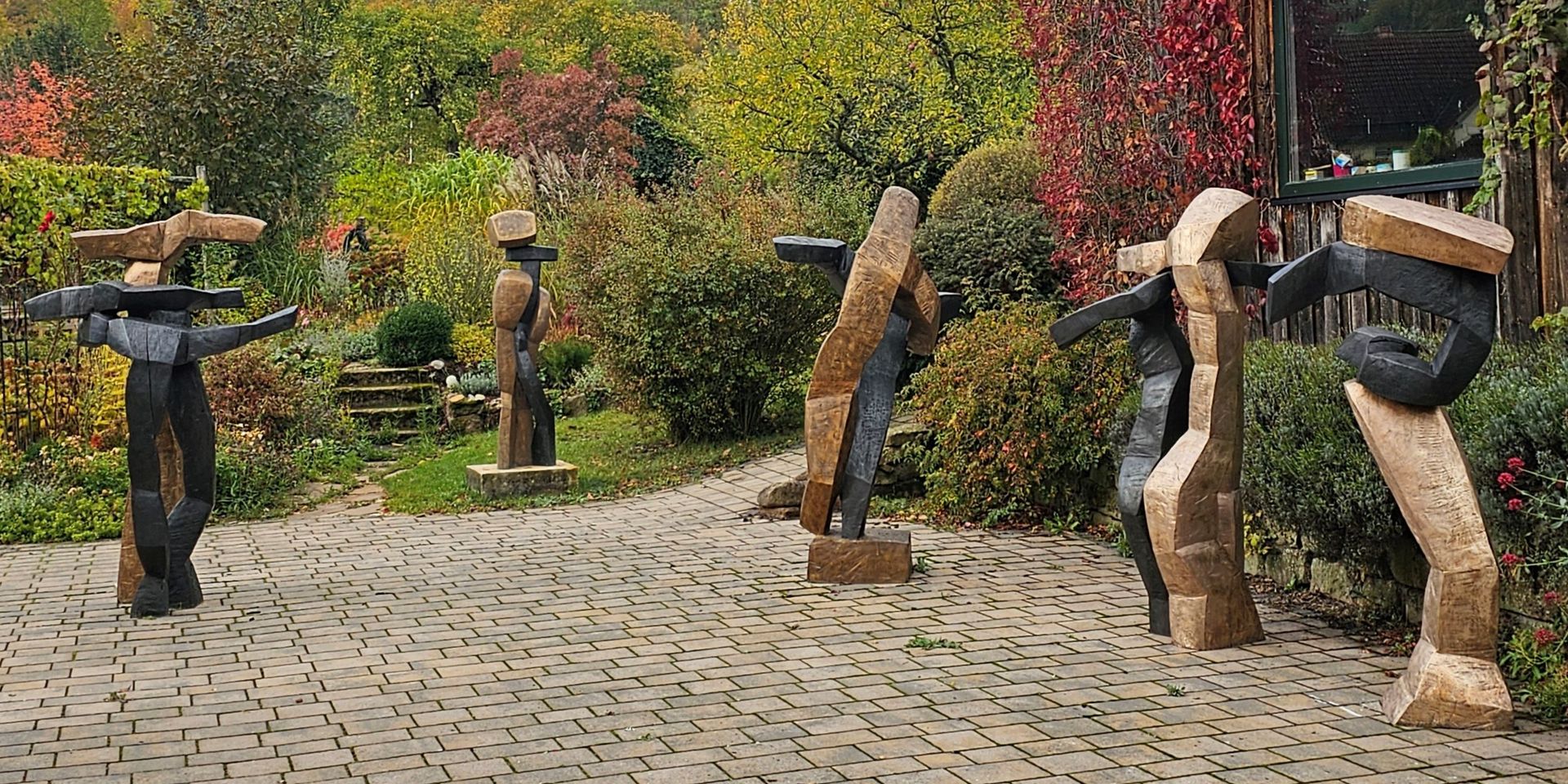
Camellia and Sculpture
special exhibition
Exhibition of contemporary art in interplay with the Belvedere plant collection.
On the occasion of the new camellia blossom in the Orangery Belvedere, works of art enter into an exciting dialogue with the plants and the architecture of the Long House and the Red Tower.
In the Long House of the Orangery Belvedere, the camellias are displayed together with other plants overwintering in the house, where they give a small impression of former winter Belvedere flowering splendour.
The camellia, which came to Europe from East Asia in the middle of the 18th century and, as one of the most important fashionable flowers, made a triumphal march throughout Europe at the beginning of the 19th century, was already in full bloom in ten different species in the Belvedere glasshouses in 1816. 27 specimens, some of them precious, are listed in the Hortus Belvedereanus published in 1820.
A cooperation with the Galerie Profil Weimar.
Photo: Galerie Profil, Elke Gatz-Hengst
Your visit
Opening hours
Address
Orangery Belvedere, Long House
Schloss Belvedere
99425 Weimar