


Projects of the Klassik Stiftung Weimar are funded by the European Regional Development Fund (ERDF) and the Free State of Thuringia, represented by the State Chancellery of Thuringia, Department of Culture and the Arts.
With Borrowed Plumes
The Forged Schiller
special exhibition
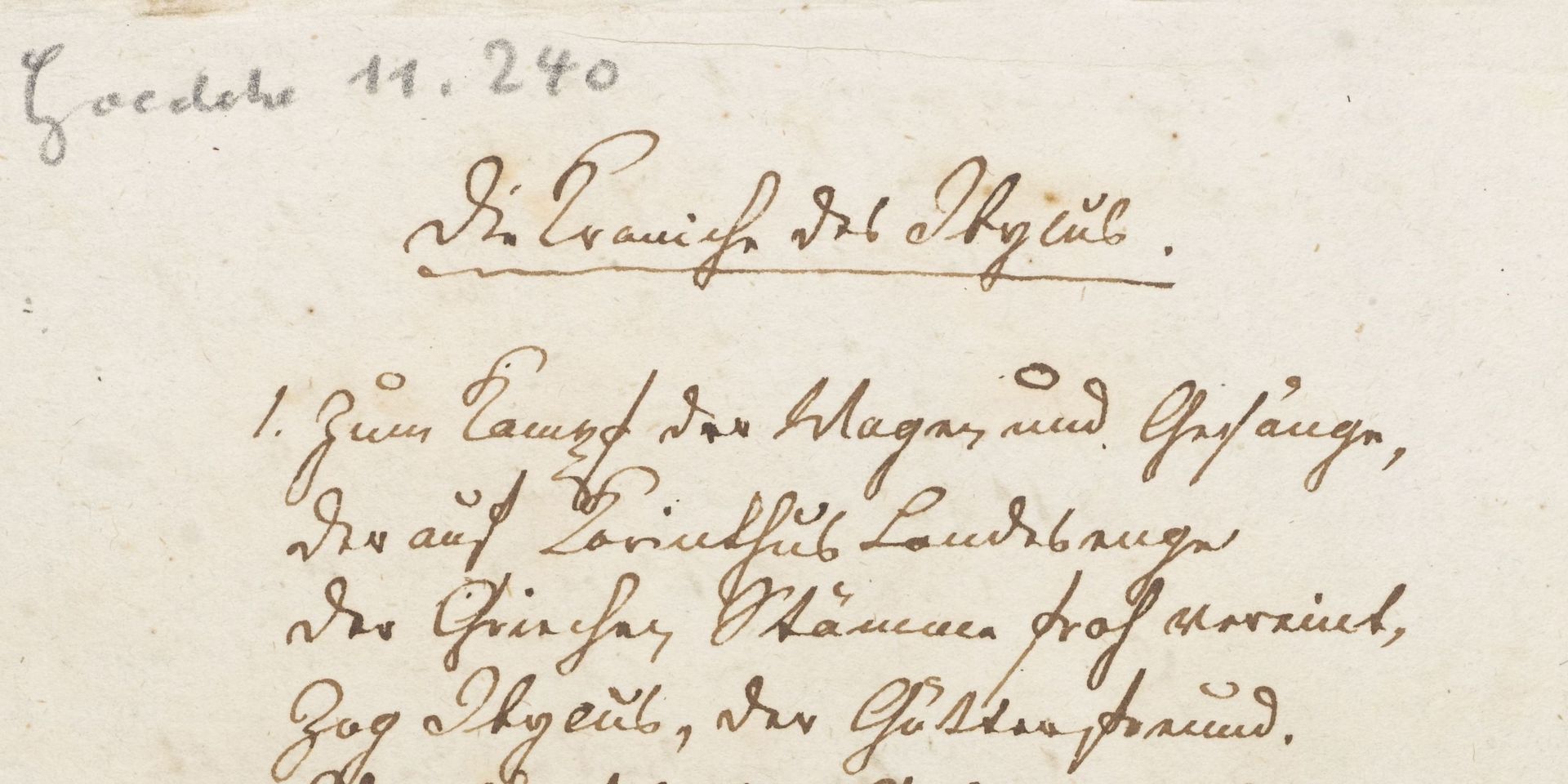
Around 1850, the architect Heinrich von Gerstenbergk forged and sold hundreds of supposedly original autographs by Schiller. This spectacular criminal case is the topic of a new exhibition at the Goethe- und Schiller-Archiv, which preserves such forgeries.
Weimar was the scene of a shocking criminal case around 1850: the architect and surveyor Heinrich von Gerstenbergk forged hundreds of Schiller’s autographs and sold them via a network of prominent intermediaries. The unwitting buyers included the Royal Library in Berlin, Grand Duke Carl Alexander of Saxony-Weimar-Eisenach, and even Schiller’s younger daughter, Emilie von Gleichen-Rußwurm.
In addition to its literary treasures, the Goethe- und Schiller-Archiv preserves such forgeries for posterity’s sake. In 2023, the archive will stage an exhibition highlighting this spectacular criminal case for the first time.
Contact
Your visit
Accessibility
 Services for the hearing impaired
 Offers in the Weimar+ app
 Offers in simple language
 Disabled toilet available
 Elevator available
 Guided tours for blind and visually impaired groups of visitors possible
 Rollator access possible
 Wheelchair access possible
 Access with electric wheelchair possible
Accepted cards
- MuseumCard